We may use cookies to store your preferences and settings, to make the site easier to use, to provide tailored advertising and to analyse the use of the site. Privacy Policy.

We may use cookies to store your preferences and settings, to make the site easier to use, to provide tailored advertising and to analyse the use of the site. Privacy Policy.
17 March 2025
This week RHG celebrates Neurodiversity Celebration Week, a worldwide initiative that challenges stereotypes and misconceptions about neurological differences. Kylie Thompson, RHG’s Neurodiversity Champion provides an insight into neurodiversity and how we champion it at RHG.
What is neurodiversity?
Neurodivergent is the term for when someone’s brain processes, learns, and/or behaves differently from what is considered “typical” or “neurotypical”. Some common types of neurodiversity include:
Some other types of neurodiversity
There are a number of other examples of how brains can process information differently.
Some people consider these to be part of the ‘neurodiversity’ umbrella and others like to keep them separate – there’s no right or wrong answer.
Common misconceptions around neurodiversity
“All Autistic/ ADHD/ Dyspraxia people are the same” Absolutely not – every neurodiverse person is different just as every neurotypical person is different. Even if you have the same type of neurodiversity, you will still have different traits and strengths individual to you.
“Neurodiversity is something I don’t need to think about/ doesn’t affect me” Incorrect! It is estimated that around 1 in 7 people (more than 15% of people in the UK) are neurodivergent. That’s more than the population of left-handed individuals! It is therefore very likely that one of your family or friends is neurodiverse.
“Neurodiverse people bring a lot of weaknesses/ challenges” While neurodiverse individuals process information differently or look at the world in a different way, this can be a huge positive in terms of innovation, problem solving and gaining different perspectives.Common strengths in neurodiverse individuals also include empathy, creativity, analytical skills attention to detail and hyper focus.
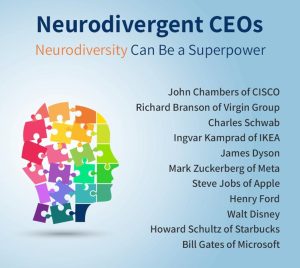
Billionaire Richard Branson (founder of the Virgin Group) focuses on the strengths his neurodiversity brings and declared “dyslexia is my superpower” Other neurodiverse CEOs can be seen below ranging from Mark Zuckerberg (Meta), Steve Jobs (Apple) to Bill Gates (Microsoft)!
At RHG we believe in fostering the strengths of neurodivergent talent and helping both our colleagues and learners use this as their superpower!


© 2020 RHG. RHG is a trading name of RHG Consult Ltd Company Registration number 04776603